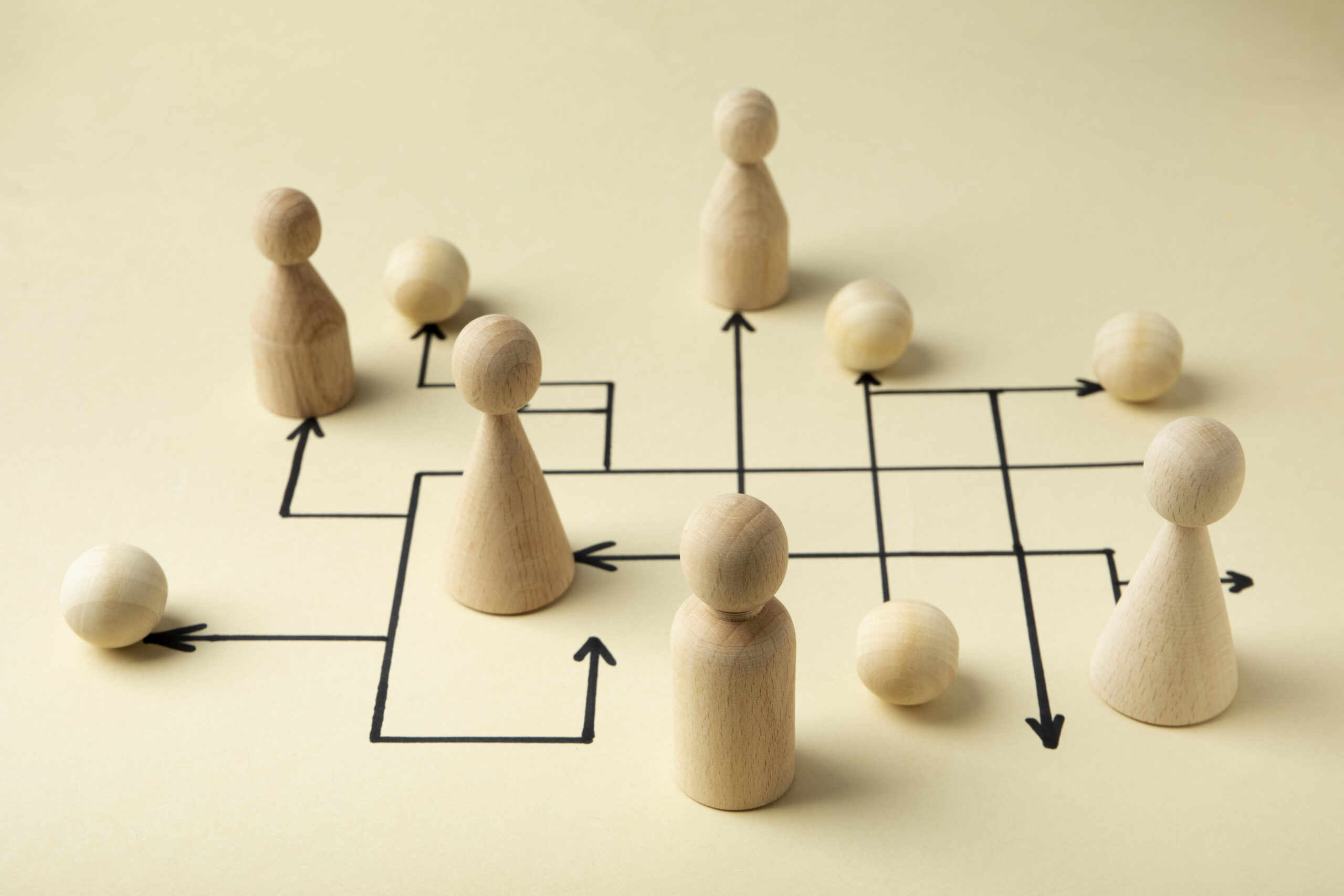


Moving beyond structure, leaders must adopt a systems mindset. This article reframes the enterprise as a complex adaptive system where feedback, self-organisation and resilience matter more than top-down control.
In the modern business landscape, the distinction between a “complicated” organisation and a “complex” one is the difference between survival and obsolescence. Drawing on the framework established by Ladyman and Wiesner, we can redefine the enterprise not as a static machine to be controlled, but as a complex adaptive system that is striving to achieve an emergent property (outcome). Understanding this shift is essential for leadership in an era of rapid disruptions.
Beyond the "Machine" Metaphor
Traditionally, corporations were viewed as complicated machines: if a part broke, you replaced it; if you turned a dial, you got a predictable result. However, the modern enterprise is characterised by “numerousity”—thousands of employees, customers, and data points interacting simultaneously. In a large organisation, the collective culture and market presence are emergent properties that cannot be managed by simply looking at individual job descriptions or siloed departments.
Key Principles for the Complex Enterprise
- Feedback Loops and Non-linearity: In a complex organisation, internal communication and market signals function as feedback loops. Small decisions (like a single customer’s viral social media post) can have non-linear, outsised impacts on brand reputation. Conversely, massive top-down initiatives may yield negligible results if they do not align with the system’s internal dynamics. Leaders must shift from seeking “direct causes” to managing “influence and conditions.”
- Self-Organisation vs. Centralised Control: A functioning complex system achieves order without a central controller. In an enterprise context, this supports the move toward “agile” and “decentralised” structures. When individual teams are empowered to interact and make local decisions, the organisation can self-organise to solve problems more efficiently than a rigid hierarchy. Order emerges from the bottom-up, driven by shared values rather than micro-management.
- Robustness and Organisational Resilience: A hallmark of a complex system is its ability to maintain function despite internal shocks. A robust enterprise is one that is decentralised enough that the failure of one department or the loss of one executive does not collapse the entire system. Complexity science teaches us that redundancy and diversity—often seen as “inefficiencies” in traditional models—are actually the keys to long-term resilience.
- Adaptation and Co-Evolution: Enterprises do not exist in a vacuum; they exist in an environment of other complex systems (competitors, regulators, and shifting consumer behaviors). Success depends on “adaptive complexity”—the ability of the organisation to change its internal structure in response to external pressure.
System Stewardship
In the work of Dr. Gerry Kraines, specifically within his Strategic Enterprise™ framework, System Stewardship is the fundamental responsibility of executive leadership to design, maintain, and evolve the “organisational anatomy” that enables human potential to flourish. Unlike traditional management, which often focuses on supervising individual tasks, stewardship treats the organisation as a living, complex system. Dr. Kraines argues that a leader’s primary accountability is not just to deliver immediate results, but to act as a steward of the system’s health—ensuring that the structures, processes, and leadership practices are “requisite,” or aligned with the natural laws of human nature and complexity.
Central to this view is the idea that systemic dysfunction—such as silos, bureaucracy, or disengaged employees—is rarely a “people problem” but a “design problem.” As a steward, the leader must ensure Vertical Alignment, where each layer of the hierarchy adds distinct value based on its “time-span of discretion.” For example, if a manager is working at the same level of complexity as their subordinate, they are not “stewarding” the system; they are interfering with it, leading to what Kraines calls “managerial abdication.”
Proper stewardship requires establishing a clear Accountability-Authority framework where every employee has the “Accountability to deliver” paired with the “Authority to act.” When these are out of balance, the system becomes stressed and inefficient.
Dr. Kraines also emphasises that stewardship involves managing the Psychological Contract between the employee and the organisation. A healthy system provides a “fair day’s pay for a fair day’s work” and matches an individual’s cognitive capability to the complexity of their role. A steward monitors this match meticulously, recognising that when a system forces a “Level 2” thinker into a “Level 3” role, the system itself suffers a “breakdown in judgment.” By focusing on Aligning Judgment rather than controlling behaviour, the system steward creates a culture of “adaptive readiness.”
Ultimately, for Dr. Kraines, system stewardship is an ethical and functional obligation to build an organisation that is both high-performing and deeply respectful of the human beings within it, ensuring the enterprise remains robust and capable of sustained value creation over the long term.
Conclusion
For the today’s leaders, the takeaway is clear: the goal of leadership is no longer to “predict and control” but to “sense and respond.” By fostering an environment where information flows freely and teams can self-organise, leaders allow for the emergence of innovation—a property that cannot be forced, only cultivated.
In the words of complexity theory, a successful enterprise is one that finds the “edge of chaos”—the sweet spot between stifling order and total randomness—where the most significant growth and creativity occur.
Through the Strategic Enterprise™ perspective and systems stewardship lense, SIM Academy equips leaders to take a systemic view of organisation design and talent strategies.
Speak with us at HR Tech Festival Asia, 5–6 May 2026, at booth H16, or contact us at simacademymarketing@sim.edu.sg.
Read more about systems stewardship – part 2 here.